

This drill introduces the reverse motion by focusing on the rotation and hand placement, without committing to clearing the obstacle. It helps you get comfortable turning your body while staying connected to the surface.
This progression commits more to the spin, helping you build the confidence to rotate your body over the obstacle. Turning your lead hand inward makes the rotation smoother and easier to control.

This progression adds a stronger jump and more commitment to the rotation, finishing with a full spin so you land facing forward.

This drill helps you feel the reverse rotation by bracing with your hand and turning your hips over the fence while seated. It builds the coordination and body awareness needed for the full motion without requiring a jump.
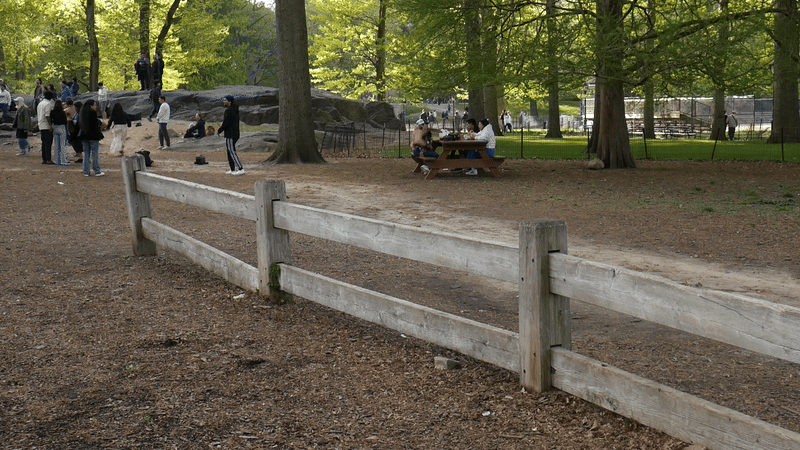
This version builds on the same movement but with more speed, helping you commit when it’s time to do the full reverse vault.

This drill lifts your hips off the fence without completing the full rotation, helping you focus on the jump and lift needed for the reverse vault.
Heckscher Playground
Located at 7th Avenue and Central Park West, it is the oldest and largest playground in Central Park, featuring a variety of slides, swings, and giant rocks.


Step Vault
A step vault is a basic parkour technique where you place one hand on an obstacle, step on it with the same-side foot, and swing your other leg through to continue forward motion. It allows for quick, fluid movement over waist-high barriers while maintaining momentum.

This drill gets you comfortable stepping one foot onto an obstacle while keeping your weight centered. It builds balance and confidence in initiating the step vault motion.

This progression adds the hand placement and body lean that mimic the actual vault, helping you learn how to shift weight and prepare your trailing leg to pass through cleanly.

This drill prepares you for the full step vault by training your ability to balance on one hand and one foot, which is key for staying controlled on narrower surfaces. It also builds the mobility needed to move fluidly in and out of the vault position.

This step-up progression helps you practice the step vault without committing to a full jump onto a high surface. It builds the coordination needed to link the movements smoothly and exit the vault with control.
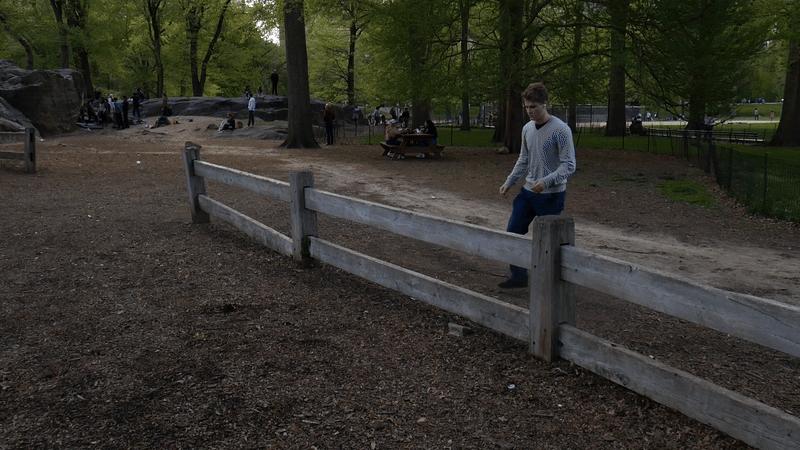
This drill trains balance on one hand and one foot like before, but the narrow surface forces greater precision and control.

A front view of the full Step Vault.

Kong Vault
A Kong Vault is a fundamental parkour movement where the athlete approaches an obstacle at speed, places both hands on top of it, and vaults over by bringing their knees up toward their chest and passing their feet between their arms. This dynamic technique allows traceurs to efficiently clear barriers like walls, railings, or benches while maintaining forward momentum.


This drill trains you to jump with both feet together and tuck your knees, starting with small jumps and gradually increasing distance. The goal is to bring your hands up while your feet travel further, setting up the mechanics of the kong vault.
This progression introduces hand placement by diving toward the object and catching yourself, helping you time your hands before your feet come through. It teaches commitment and builds confidence in clearing obstacles.
This drill continues building the feeling of driving your feet past your hands, now using an obstacle to mimic the vault setup. It reinforces timing, hand placement, and the forward momentum needed for a kong.

This progression starts by placing your hands securely on the fence before jumping, ensuring a safe connection to the surface. Instead of committing to a full kong, your feet go around the sides, and you finish with a step vault to add control through an extra point of contact.

This version removes the foot placement but still sends the legs around the sides, helping you commit more to the jump while keeping it low-risk and controlled.

This drill brings the legs through the hands, with an exaggerated hip lift to make it easier to drive the feet down and clear the obstacle. You don’t need to lift as high as shown, but it’s a useful cue to build power and space in the vault.
This drill gets you comfortable stepping one foot onto an obstacle while keeping your weight centered. It builds balance and confidence in initiating the step vault motion.
This progression adds the hand placement and body lean that mimic the actual vault, helping you learn how to shift weight and prepare your trailing leg to pass through cleanly.
This drill prepares you for the full step vault by training your ability to balance on one hand and one foot, which is key for staying controlled on narrower surfaces. It also builds the mobility needed to move fluidly in and out of the vault position.
This step-up progression helps you practice the step vault without committing to a full jump onto a high surface. It builds the coordination needed to link the movements smoothly and exit the vault with control.
This drill trains balance on one hand and one foot like before, but the narrow surface forces greater precision and control.
This drill trains you to jump with both feet together and tuck your knees, starting with small jumps and gradually increasing distance. The goal is to bring your hands up while your feet travel further, setting up the mechanics of the kong vault.
This progression introduces hand placement by diving toward the object and catching yourself, helping you time your hands before your feet come through. It teaches commitment and builds confidence in clearing obstacles.
This drill continues building the feeling of driving your feet past your hands, now using an obstacle to mimic the vault setup. It reinforces timing, hand placement, and the forward momentum needed for a kong.
This progression starts by placing your hands securely on the fence before jumping, ensuring a safe connection to the surface. Instead of committing to a full kong, your feet go around the sides, and you finish with a step vault to add control through an extra point of contact.
This version removes the foot placement but still sends the legs around the sides, helping you commit more to the jump while keeping it low-risk and controlled.
This drill brings the legs through the hands, with an exaggerated hip lift to make it easier to drive the feet down and clear the obstacle. You don’t need to lift as high as shown, but it’s a useful cue to build power and space in the vault.

Reverse Vault
A Reverse Vault is a parkour movement where the athlete approaches an obstacle sideways, places one or both hands on it for support, and swings their legs over while rotating their body 180 degrees to land facing the opposite direction. This technique is useful for changing direction quickly while clearing obstacles and maintains fluid movement flow in parkour sequences.
This drill introduces the reverse motion by focusing on the rotation and hand placement without committing to clearing the obstacle. It helps get you comfortable turning your body while staying connected to the surface.
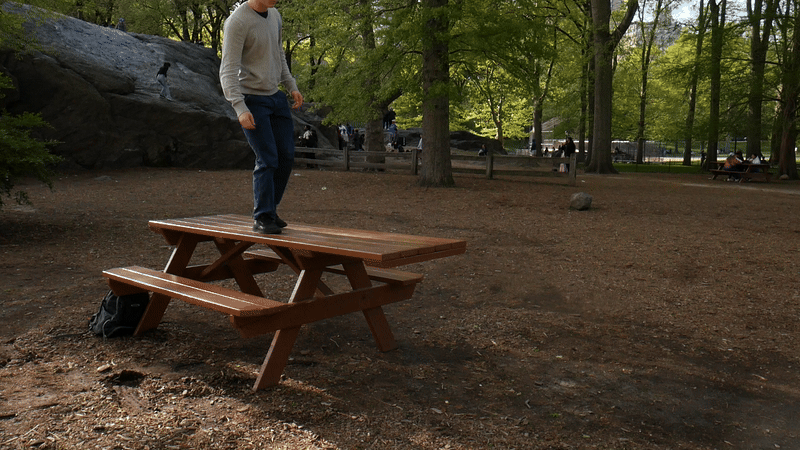
This progression commits more to the spin, helping you build the confidence to rotate your body over the obstacle. Turning your lead hand inward makes the rotation smoother and easier to control.
This progression adds a stronger jump and more commitment to the rotation, finishing with a full spin so you land facing forward
This drill helps you feel the reverse rotation by bracing with your hand and turning your hips over the fence while seated. It builds the coordination and body awareness needed for the full motion without requiring a jump
This version builds on the same movement but with more speed, helping you commit when it’s time to do the full reverse vault.
This drill lifts your hips off the fence without completing the full rotation, helping you focus on the jump and lift needed for the reverse vault.